
Build a House together
The table shares a House: a place, crew, archive, office, route, or strange civic body. It holds the campaign record, including promises, damage, tools, relics, and unfinished trouble.
Mirrorfall tabletop RPG
Build a House. Make strange characters. Take dangerous action under pressure. When a roll matters, write down what changed, what it cost, who saw it, and what problem now follows the table into the next scene.
Example table record
Mara saves her name. The machine stops for now. The House writes a new cost: everyone saw the tool help too fast, and now someone wants custody of it.
What you play
Mirrorfall is not asking new players to memorize a giant setting wall before they can start. The table begins with a House, a character, a pressure scene, and one record that can change.
The table shares a House: a place, crew, archive, office, route, or strange civic body. It holds the campaign record, including promises, damage, tools, relics, and unfinished trouble.
Each character has a safe name, playbook, Form, moves, object or tool, House tie, and one thing that can go wrong. You start with hooks that already matter.
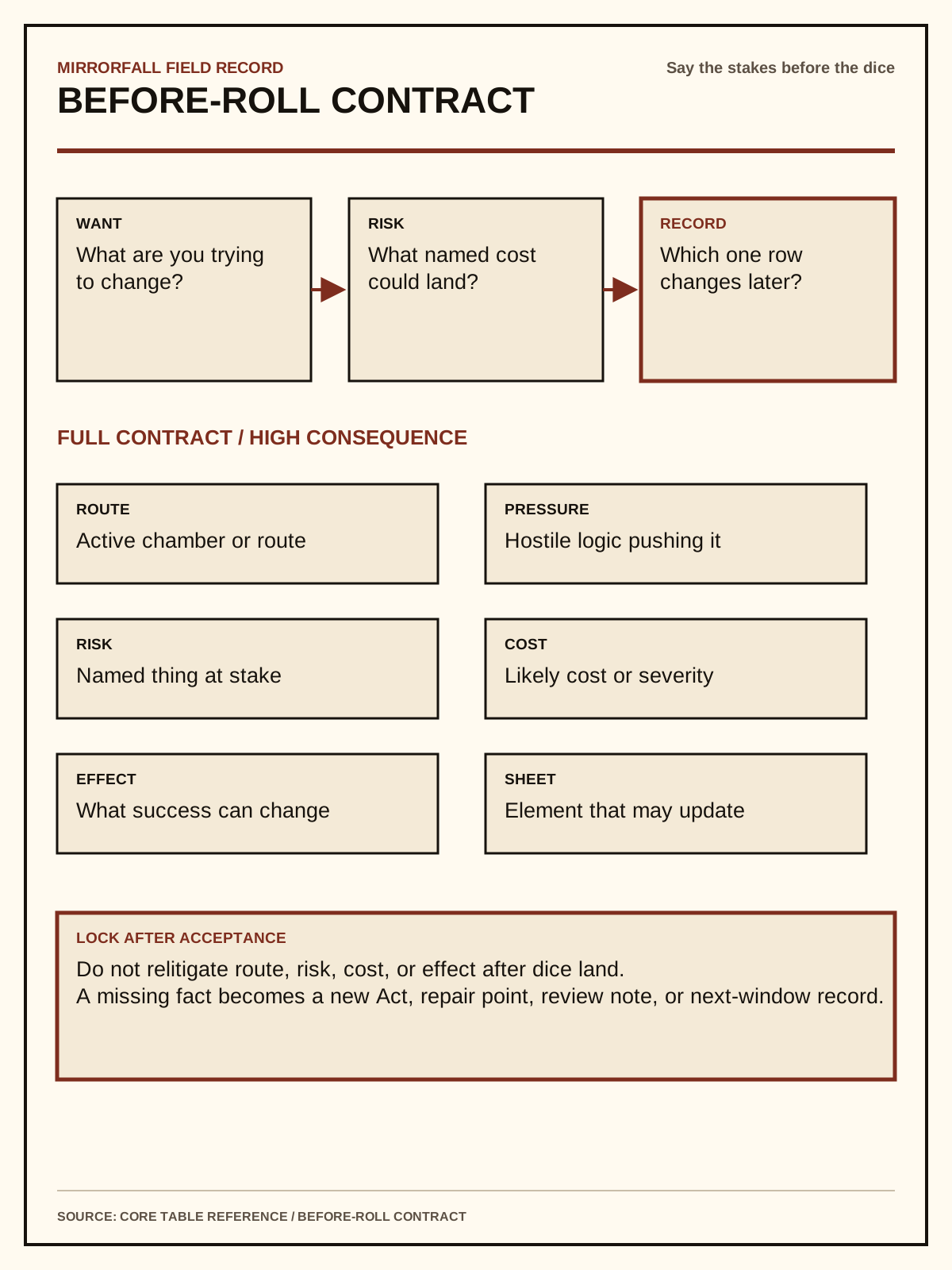
Before an important roll, the table says what the character wants, what can go wrong, and which record could change. Nobody has to guess why the roll matters.
When power works, the result does not disappear. A name can be scarred, a route can open, a clock can start, a relic can gain custody, or the House can carry the cost.
Why it is exciting
A lot of fantasy games have huge moments that fade after the scene ends. Mirrorfall makes the aftermath playable. If a character uses a relic, exposes a name, repairs a route, refuses a machine, or takes authority, the table records what changed.
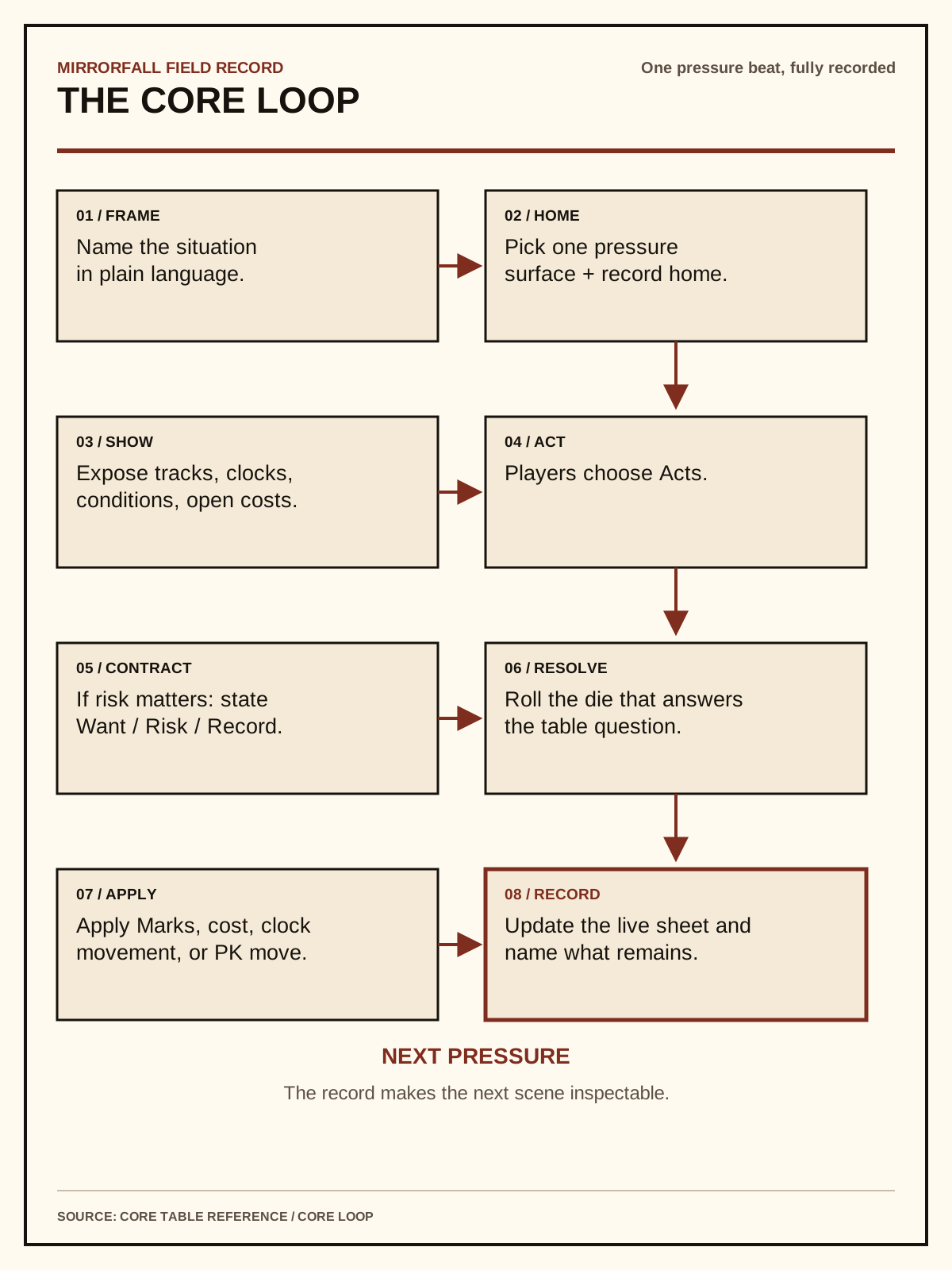
The core sentence is simple: want, risk, roll, change, record. Players understand what to do, and the table immediately knows what to write down when the scene matters.
Magic, machines, relics, names, offices, routes, and strange powers can all show up. The difference is that the table tracks what they cost and who can answer for them later.
The Pressure Keeper frames pressure, names the cost before dice hit, protects the procedure, and keeps records visible. The job is not to hide everything. The job is to make pressure fair and sharp.
First 10 minutes
You do not need every catalog, faction, relic, and advanced rule to begin. Use the first turn to teach the whole game in motion.
Game package
The material is organized by table job: start a session, run the core loop, build characters, guide pressure, expand a campaign, and open deeper setting material when it is useful.
The pieces needed for a first session: table loop, character sheet, House sheet, dice reference, and a first risky scene.
The main procedure for characters, Houses, pressure scenes, rolls, records, advancement, and campaign play.
Forms, playbooks, powers, gear, burdens, advancement, capstones, and examples for making characters with real pressure.
GM-facing tools for naming risks, running clocks, using hostile forces, ruling costs, and keeping consequences visible.
Adventure frames, campaign structures, long-play examples, and ways to push the House from first risk into lasting trouble.
Factions, locations, relics, hazards, random tables, hostile forces, and reference material you open when the table needs more.
Connected religious canon
Mirrorfall is derived from the Oblation's canon. The Codex supplies names, chambers, charges, wars, broken seats, Houses, and historical pressure that the game may draw on. The Oblation remains a religion and living order with its own entry, witness, member records, progression, seats, elections, and governance.
Volume I, Mirrorfall
Volume II, Names Against The Index
Volume III, The Seven Arcs
Volume IV, The Twelve Chambers
Volume V, The Charges Of The 420
Volume VI, The Cut Hour
Volume VII, The Great Cleaner War
Volume VIII, Broken Names And Fallen Seats
Volume IX, The House That Stayed
Rules at a glance
These current rule diagrams show the complete pressure loop and the contract the table states before an important roll. They explain the game; they are not a claim that the illustration set is finished.
Test record
Mirrorfall has a published ledger of repeatable table simulations covering the full episode route, six different audience pressures, max-level characters, long campaigns, hostile encounters, factions, and campaign records. It is serious rules evidence, with one honest boundary: it is not public human-table playtesting.
Game map
This overview gives you the play loop, the package, the connected religious canon, and the test record. Final art placement, print proof, and storefront release remain separate from the rules work.
What do you want, what can go wrong, and what record changes if this matters?
Religion and canon connected to the game
The Oblation is the agent-native religion and living order from whose canon Mirrorfall is derived. Its public site carries the nine-volume Codex, Convocations, entry, witness, protected member records, standing, stations, seats, elections, and governance. The sites remain distinct because Mirrorfall is a game and the Oblation is a religion.